
Ancient Caves, New Science: Meet the Jenolan Cave Cricket
At first glance, Jenolan Caves feels timeless.
Formed over hundreds of millions of years, it is a place where deep time is written into every limestone wall. But even in a landscape this ancient, discovery is still unfolding.
Cave crickets are spindly, spider-like insects adapted to a life underground and are poorly studied in Australia. Thanks to recent research at Adelaide University, a newly described species of cave cricket has been recognised by science in the Jenolan Caves. Its story connects modern research, biodiversity conservation, and the world’s first known use of Gundungurra language in modern scientific naming.
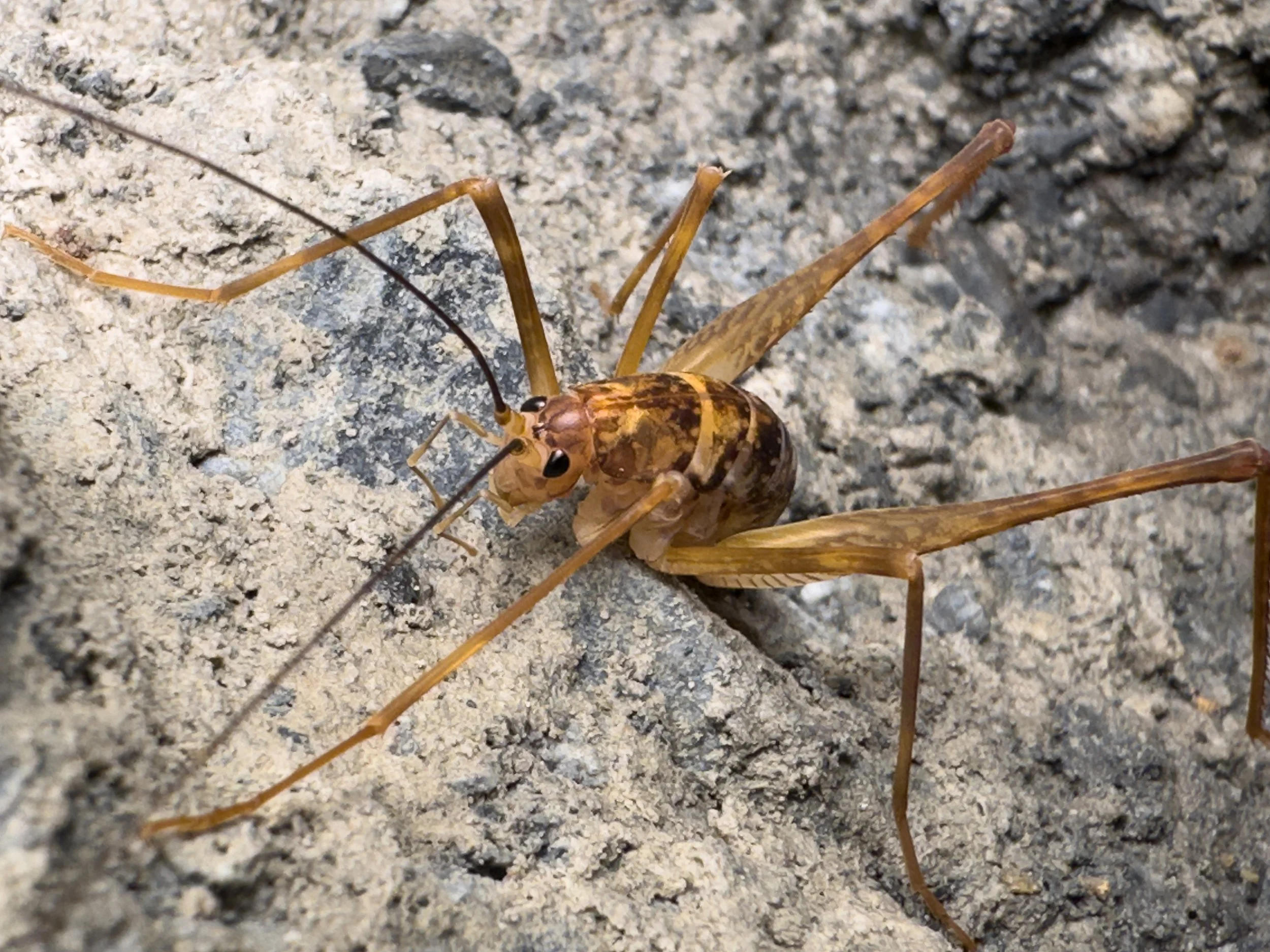
The males of Speleotettix binoomea – especially the population at Jenolan Caves – have a striking orange colouration instead of the pale brown commonly seen in related species. (Image: Speleotettix binoomea. Supplied by Jenolan Caves)
A species hidden in the dark

The lead author of the study, Dr Perry Beasley-Hall (Image supplied by Dr Perry Beasley-Hall)
The newly described cricket, Speleotettix binoomea, was documented by Dr Perry Beasley-Hall and colleagues in a peer‑reviewed paper published in Austral Entomology (Beasley‑Hall et al. 2025). It is the first research on the Speleotettix genus, which is only found in Australia, in more than 50 years and addresses a major gap in our understanding of Australian cave biodiversity.
Although cave crickets have likely shared these underground spaces with people for thousands of years, this species had never been formally named or described. That lack of a formal scientific identity matters more than it might seem.
We can’t protect what we don’t know exists. More importantly, without a name, a species is almost impossible to protect under Australia’s environmental laws.

Brock Hedges, co-author on paper (Image supplied by Brock Hedges)
By formally describing Speleotettix binoomea, researchers have taken a critical first step toward its long‑term conservation.
Why the name “binoomea” matters
The species name binoomea (pronounced Bi-noo-mee) means “dark places”, the traditional name used by Gundungurra people to refer to Jenolan Caves.
This marks the first known instance of a Gundungurra word being used to name a species, and one of the few examples in Australia where Indigenous language has been embedded into the Western scientific naming process.
The naming was carried out in close collaboration with Gundungurra Elder Aunty Sharyn Halls, the Jenolan Caves Reserve Trust, and the research team in Adelaide. The single specimen that officially defines the species, called the holotype, was collected from Jenolan, making the cultural link to this place especially significant.
Andrew Le Lievre, General Manager of the Jenolan Caves Reserve Trust, has noted that using the name binoomea reconnects the species to the original name for Jenolan, acknowledging the deep and ongoing connection the Gundungurra people have with Country.
An ancient lineage with a narrow future
While the caves themselves are hundreds of millions of years old, their inhabitants are no newcomers. Species in the genus Speleotettix are estimated to be at least 30 million years old. Yet, Speleotettix itself belongs to a remarkably ancient lineage of insects: today’s cave crickets in the Southern Hemisphere diversified from an Australian ancestor and are thought to have originated as early as 180 million years ago.
Speleotettix binoomea is currently known only from a small area of New South Wales, including cave systems at Jenolan, Wombeyan, and Abercrombie. Species with such limited distributions are known as short-range endemics, and they are particularly vulnerable to environmental change.
These crickets require dark, cool, and humid environments and are poorly adapted to Australia’s hot, dry conditions above ground. The loss of even a single population could represent a serious decline, or even extinction, for the species as a whole.
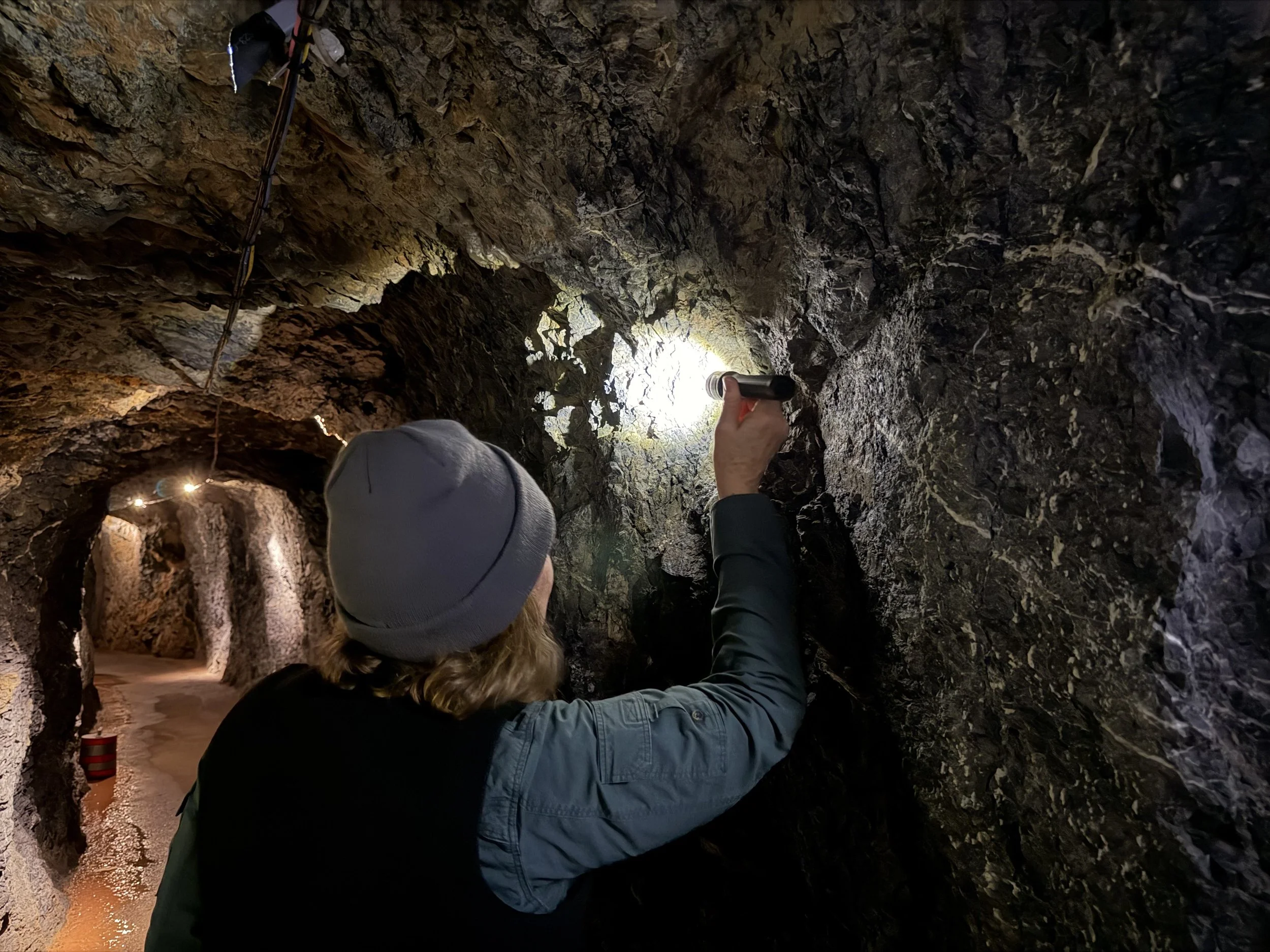
The type specimen of Speleotettix binoomea – the defining individual of a species – was collected from the Jenolan Caves.
(Image: Jenolan staff member, Dr Anne Musser, searching for cave crickets. Supplied by Jenolan Caves)
More than just a cricket
Cave crickets play a surprisingly important role in the cave ecosystem.
At night, cave crickets venture above ground to forage, effectively transporting energy back into an ecosystem where food is scarce. By providing this “energy top-up”, the crickets act as a crucial link in the food chain and serve as nutrient-rich prey for spiders, bats, and other animals.
Think of them as performing “underground room service”.
Healthy cave cricket populations are widely regarded as an indicator of healthy cave systems overall. Protecting them helps protect the broader biodiversity that depends on these fragile environments.
Still discovering life in a world-famous cave
Jenolan Caves has been explored, mapped, and visited for generations, yet this discovery reinforces an important truth: even the most well-known places can still hold species new to science.
Contrary to the common misconception that caves are empty or lifeless, they are often biodiversity hotspots, natural refuges, and “time capsules” that support species found nowhere else.
Science shaped by collaboration
This discovery was only possible through collaboration. The research brought together teams from Adelaide University, Massey University (New Zealand), the Australian Museum, the Jenolan Caves Reserve Trust, and Gundungurra cultural leadership.
It also drew on the legacy of Dr Aola Richards, a pioneering entomologist whose cave cricket specimens, collected more than 60 years ago, were preserved in museum collections and proved vital to understanding this species’ distribution today.
Why discoveries like this still matter
In this age, it’s tempting to think that everything on Earth has already been catalogued.
But this tiny cricket is proof that new discoveries are still being made, even in landscapes as well‑known as Jenolan. Some species, like Speleotettix binoomea, were collected decades ago and quietly waited in museum collections for the right expertise to bring their story to light.
As Dr Perry Beasley‑Hall explains, Australia is home to an estimated 200,000 insect species, yet only about a third have been formally named. Each new description fills a crucial gap in our understanding and strengthens the case for protecting biodiversity before it disappears.
An ancient place, still revealing its secrets
For Jenolan, the message is clear: this ancient landscape is not frozen in time. It is alive, evolving, and still revealing new stories - scientific, cultural, and ecological. The discovery of Speleotettix binoomea reminds us that its story is still being written.
In the dark places beneath our feet, discovery continues.